



Bucaramanga, Colombia – September 1, 2026
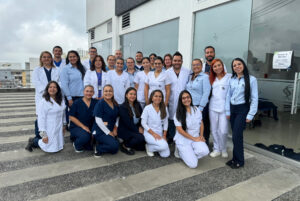
On August 24, 2026, Sies Salud inaugurated a radiotherapy unit in Bucaramanga, the first linear accelerator in the company’s network. The unit was opened in a ceremony attended by Andrés Forero Molina, Colombian Senator; Miguel Ángel Pinto Rueda, House Representative of the Santander province; Álvaro Puerto Valencia, Founder and CEO of Sies Salud; Claudia Díaz, Vice President of Operations of Sies Salud; and Linzor partners and Sies board members Gerardo Biagi and Cipriano Santisteban.
For Linzor, the inauguration marks a change in what the company is able to do for its patients. When we invested in Sies in December 2020, most of its work rested on a single disease. It now treats a range of chronic conditions, and the model that made it good at the first is what allows it to take on cancer.
The original case
Sies was founded in 2006 by Álvaro Puerto Valencia, who built it into Colombia’s leading provider of HIV care and remains its chief executive today. When Linzor acquired a majority stake in December 2020, the company operated 18 health units and treated around 13,700 HIV patients per month, alongside a nascent chronic kidney disease practice, general primary care, and palliative care delivered in patients’ homes.
Two of Linzor’s operating partners, Mario Ciardelli and Fernando Fonseca, joined the board at closing and have served on it since.
The thesis rested on a plain observation about how Colombia pays for chronic illness. Insurers carry the cost of patients whose conditions last a lifetime, and those costs rise steeply when a patient destabilizes. A provider that keeps patients stable is therefore worth more to an insurer than one that treats them cheaply, and Sies had the clinical evidence to make the argument: the Cuenta de Alto Costo, the national body that tracks Colombia’s highest-cost diseases, named it the country’s best HIV care provider in 2019.
If the model worked for HIV, it should work for any condition that does not go away. Chronic kidney disease was already underway. Autoimmune disorders, diabetes and hepatitis C were the natural next steps, and that was the plan we underwrote. However, the years that followed brought sustained financial and regulatory pressure across the Colombian health system.
Holding the standard
In February 2023, the government proposed a reform that would have changed the role insurers play in the system. That bill was shelved, reintroduced in September 2024, and shelved again by a Senate committee in December 2025. While it was pending, the regulator took control of health insurers covering 58% of the country’s population, payment rates rose more slowly than the cost of care, and payment cycles across the sector lengthened considerably.
Sies chose to protect the clinical standard at the cost of volume. It gave up programs whose economics no longer supported the way it sought to deliver care, among them its primary care and home care lines, and concentrated on the conditions where its results were strongest.
In more than one case the arrangement was later reversed: around 900 chronic kidney disease patients and some 1,500 autoimmune patients have returned to the company over the past year.
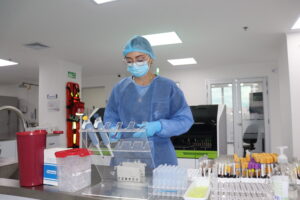
It also kept investing through the most difficult stretch. In February 2023, Sies opened its own centralized diagnostic laboratory, and by the end of that year it was processing 98% of its tests in house. It put a mobile health unit on the road, and it opened units where specialized care had not previously existed, among them Quibdó, the capital of Chocó, and the municipality of La Dorada.
The business today
Nearly six years into the investment, Sies is a different company:
- Treating close to 28,000 HIV patients per month, up from around 13,700 at our entry, and holding its position as the country’s leading provider in the pathology
- Caring for 52,193 monthly active patients across all programs during 2025, close to 95% of them with a chronic or high-cost condition
- Operating 24 health units and a mobile unit, with a presence in 65% of Colombia’s departments and most units in mid-sized cities where specialized care is scarce
- Extending from HIV alone to chronic kidney disease, autoimmune disorders spanning more than 90 distinct diagnoses, diabetes, hepatitis C, palliative care, preventive HIV therapy and now oncology
- Processing its own laboratory work, dispensing its own medication, and reaching patients outside the network through a solar-powered mobile unit that served 2,850 people per month in 2025
- Employing 1,412 people at the end of 2025, up from 631 at the time of our investment, with 781 jobs created during Linzor’s ownership

Bringing cancer care to mid-sized cities
In Colombia, cancer is treated in Bogotá, Medellín and Cali. A patient diagnosed in a secondary city such as Valledupar or Tunja either travels to one of the larger cities or waits for a slot in a queue that forms there. Colombia recorded 123,053 new cancer cases in 2024, a burden the International Agency for Research on Cancer expects to keep rising through 2050 as the population ages, and the Cuenta de Alto Costo puts the median wait from a confirmed diagnosis to the start of treatment at 51 days nationally. According to the same institution, ninety-four percent of cancer cases in the country are already at an advanced stage when they are diagnosed, which makes the wait an especially devastating part of the disease.
Sies entered oncology in 2024 by acquiring Insuasty, a specialized practice treating around a thousand patients in breast, colon, stomach, skin and prostate cancer, and has been extending that model into cities where it already runs health units and already knows the local patient population. Chemotherapy, oncology consultations, laboratory work and medication are provided locally. Radiotherapy, which requires equipment most mid-sized cities lack, will be anchored in Bucaramanga on the network’s first Accuray Radixact system, adding to the city’s existing radiotherapy capacity and serving patients referred from across the network.
The choice of technology reflects the same logic as the rest of the network: get more from what is already built. Radixact is a helical tomotherapy platform designed for the ultra-hypofractionated protocols now validated in large clinical trials for breast and prostate cancer, compressing courses that used to run to twenty or more sessions into five, without giving up on clinical outcomes.¹
The unit’s inauguration paired that technology with international clinical validation: Francisco Javier Serrano Andreu, president of the Sociedad Española de Oncología Radioterápica in Spain, and Rafael García, a stereotactic radiotherapy specialist at the Hospital Ruber Internacional in Madrid, joined Sies’ radiation oncologists to help set the clinical protocols the unit will run on.

Equipment and protocols only count for something if the patient reaches them. Moving people and materials reliably across a difficult country is the harder half of the model, and it is what the company has been doing for twenty years. “We are good at moving things,” as Álvaro Puerto puts it. “We move patients, medicines and samples.”
What the company is applying to cancer is the discipline it developed in its chronic programs, where the whole task is to keep a patient out of crisis. Chronic patients do not recover, so the difference between a good year and a bad one is whether the condition holds. In chronic kidney disease, the company sells its program on a single promise: that the patient never reaches dialysis. Its results on hospitalizations, mortality and treatment adherence run ahead of the benchmarks it is measured against, which come from the Cuenta de Alto Costo and from national clinical practice guidelines, and patient satisfaction has stayed above 99%.
Cancer poses the same question in a harsher form. A patient whose treatment is delayed or interrupted by a journey to another city is a patient whose disease advances in the meantime. Bringing diagnosis, chemotherapy, laboratory work, medication and now radiotherapy within reach of where the patient lives is what turns a series of appointments into a course of treatment.
Community and sector work
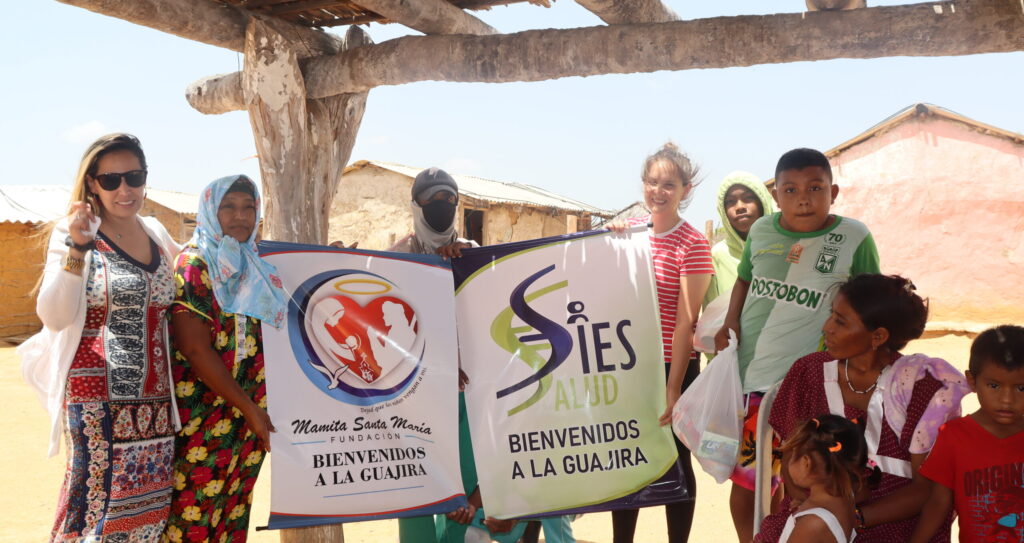
The company’s sense of what it owes extends past the patients it is paid to treat. Since 2022, Sies has run a health program in remote communities, beginning in Chocó and La Guajira and moving in 2023 to the town of Sampués, in the department of Sucre, where it stayed until this year. Over three years there, it reached about 1,600 people through some 3,600 free consultations, laboratory tests and medications, and trained over 470 people in the community on preventive health. Malnutrition, anemia and chronic disease management all improved. Earlier this year the company handed the clinical records and the method over to the local health secretariat and hospital, to ensure long-term continuity of the program.
The same attention shows up inside the company. Three quarters of its employees are women, and in 2024, Sies received LAVCA’s Gender & Diversity Award. Non-clinical teams work on a hybrid basis that is roughly 90% remote, and the company visits their homes to confirm they have what they need to do the job properly. Seven of its health units run partly on solar panels covering close to 16% of energy consumption, and the mobile unit is energy-autonomous.
Beyond Sies’ own walls, Álvaro Puerto has spent several years convening the rest of the sector. Sies helped found a non-profit association of specialized care providers that now helps peer institutions improve their own technical standards, contracting models and information systems. A second organization it promoted brought 33 health organizations together, among them providers, insurers, patient groups and health professionals, and produced the first agreed diagnosis in three decades of what the system needs. The current effort is to give Colombia a defined national care pathway for cancer, of the kind the country built for HIV in 2005. The board’s reasoning is that the health system will not improve solely because Sies does its job well; it will improve when many more institutions do so as well.
In sum
Sies Salud’s years with Linzor have not followed the plan we wrote in 2020. Some of the growth programs were given up because they could not be run properly on the terms available. What held was the thing we actually bought into: a focused management team that will not lower clinical standards to keep a contract, and a business model that produces results insurers cannot replicate by themselves.
Sies is the kind of company we look for. Its patients, its employees, the communities it works in and the health system it operates within are at the center of how the business makes decisions, and the model it has built over twenty years works because those interests point in the same direction. A patient who stays well costs the insurer less. An insurer that pays properly allows the company to invest in growth projects. A company that invests can bring the country’s most advanced radiotherapy technology to a mid-sized city. In this business, doing right by patients and building a company that lasts are the same work. Sies has built its model on that, and it is what will let it keep going, and keep growing, for many years to come.

Note: ¹ In 2024, a Lancet Oncology Commission co-authored by the IAEA estimated that broader use of hypofractionation in those two cancers alone could let the world’s existing radiotherapy infrastructure treat 2.2 million more patients a year with no added capital.